

- English
 简体中文
简体中文 Español
 Português
 русский
 Français
 日本語
日本語 Deutsch
 tiếng Việt
 Italiano
 Nederlands
 ภาษาไทย
 Polski
 한국어
한국어 Svenska
 magyar
 Malay
Malay বাংলা ভাষার
 Dansk
Dansk Suomi
Suomi हिन्दी
 Pilipino
 Türkçe
 Gaeilge
 العربية
 Indonesia
 Norsk
Norsk تمل
تمل český
český ελληνικά
 український
 Javanese
 فارسی
فارسی தமிழ்
தமிழ் తెలుగు
 नेपाली
 Burmese
 български
 ລາວ
ລາວ Latine
 Қазақша
 Euskal
 Azərbaycan
 Slovenský jazyk
 Македонски
 Lietuvos
 Eesti Keel
 Română
 Slovenski
 मराठी
मराठी

Ore Rotating Container
In hard-rock mining and mineral processing, moving ore from stopes to passes or mill feed requires containers that can handle abrasive loads and frequent discharge cycles. The ore rotating container range answers this need with a focus on controlled tipping, low maintenance, and compatibility with standard mine car systems. Within this range, the Rotating Discharge Ore Container is suited for coarse ore and waste rock, while the Mineral Concentrate Rotating Container handles high-density, fine-grained concentrates with enhanced liner protection. For operations with restricted drift height, the Half-height Ore Container offers a lower profile without sacrificing payload. All models are engineered as part of a larger Mining Container fleet, allowing shared spare parts and simpler training for maintenance crews.
The Ore Rotating Container is designed for both track-bound and trackless mining operations. Its main body uses a rotating cradle that permits side discharge without lifting the entire container, which lowers the center of gravity during unloading. The frame is built from welded Q355B steel plate with full-penetration joints at high-stress corners. Replaceable wear liners are available in 400 HB, 450 HB, or 500 HB hardness to match the abrasiveness of the ore. The rotation system uses a hydraulic motor with a planetary gearbox, and a manual override valve allows emergency discharge if hydraulic power is lost. The container locks onto mine cars, flatbeds, or rail trolleys through a four-point twist-lock mechanism that can be released from either side. The rotating discharge mechanism relies on a reinforced pivot shaft supported by self-aligning roller bearings, keeping the discharge motion smooth even when the load is unevenly distributed. A locking pin prevents accidental rotation during tramming, and an optional proximity sensor confirms the container is in the home position before the locomotive moves. The interior geometry is sloped at 55 degrees on the discharge side, allowing wet or sticky ore to slide out with minimal hang-up. Routine maintenance mainly involves greasing the pivot bearings, checking hydraulic hoses, and inspecting liner wear. The hydraulic power pack can be mounted on the container frame or supplied as a separate skid-mounted unit for connection to the mine's central hydraulic ring. All units undergo a full-load rotation test and a 1.5-times overload static test before leaving the factory. Welds are inspected by ultrasonic testing on critical joints. The paint system is selected for underground corrosion resistance and can be upgraded to a hot-dip galvanized finish for highly humid environments.
Key equipment specifications
- Usable volume: 2.0 m³, 2.5 m³, and 3.0 m³
- Payload capacity: 5,000 kg to 8,500 kg depending on material density
- Maximum material bulk density: 3.0 t/m³
- Rotation angle: 0° to 150° continuous
- Full-load discharge time: 12 to 20 seconds
- Drive type: hydraulic motor with manual override or pneumatic motor
- Hydraulic working pressure: 16 to 20 MPa
- Replaceable liner thickness: 10 mm, 12 mm, or 16 mm
- Wheel gauge options: 600 mm, 750 mm, or 900 mm
- Surface protection: SA 2.5 blast cleaning, epoxy zinc-rich primer, polyurethane topcoat
- Sealing system: double-lip rotary seal with dust purge port
- Ambient operating temperature: -20°C to +50°C
Model range and technical parameters
| Parameter | Unit | ORC-20 | ORC-25 | ORC-30 |
|---|---|---|---|---|
| Usable volume | m³ | 2.0 | 2.5 | 3.0 |
| Payload capacity | kg | 5,000 | 6,500 | 8,500 |
| Max material density | t/m³ | 2.8 | 2.8 | 3.0 |
| Rotation angle | degree | 135 | 135 | 150 |
| Discharge time | s | 15 | 18 | 20 |
| Hydraulic working pressure | MPa | 16 | 18 | 20 |
| Liner thickness | mm | 10 / 12 | 12 / 16 | 12 / 16 |
| Wheel gauge | mm | 600 / 750 / 900 | 600 / 750 / 900 | 750 / 900 |
| Tare weight | kg | 1,850 | 2,300 | 2,950 |
| Overall length | mm | 2,400 | 2,600 | 2,800 |
| Overall width | mm | 1,200 | 1,300 | 1,400 |
| Overall height | mm | 1,100 | 1,200 | 1,300 |
Related Products


Hot Products
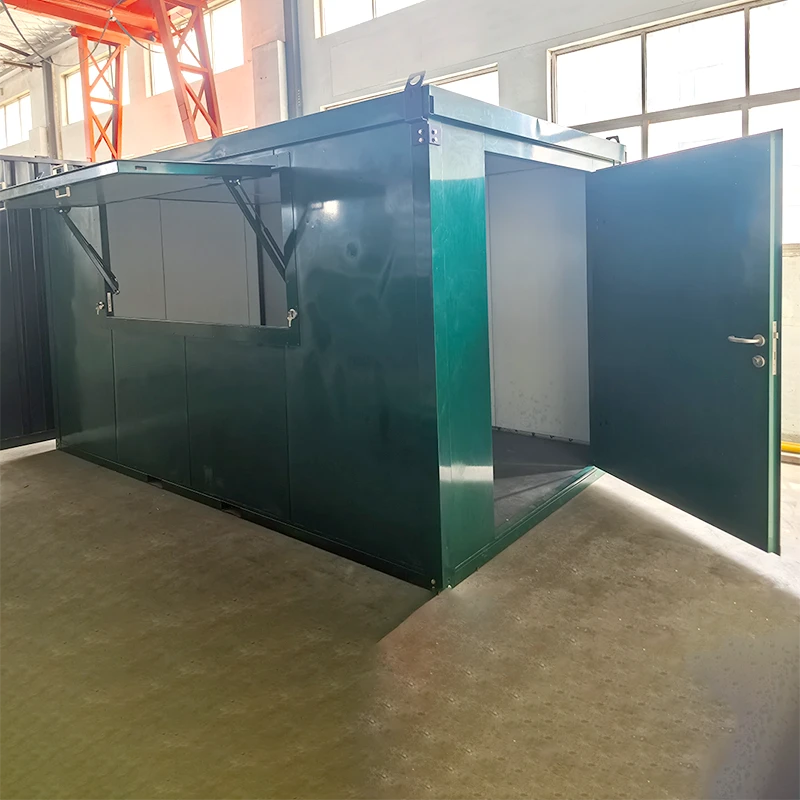
Flat Pack Container Kiosk
The superior flat pack container kiosk from Container Family is built with hydraulic service window and security door,can be used as a newsstand,pop-up store,ticket booth,park concession stand,etc.Picture shows pre-assembly demo in factory, containers ship flat-packed disassembled.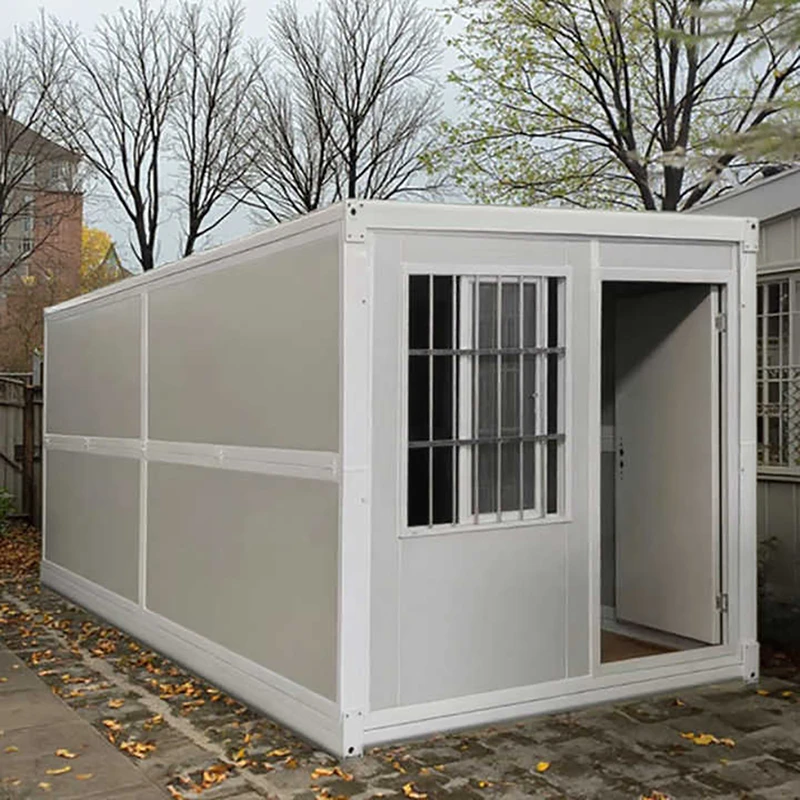
X-type Folding Container
Container Family direct quality X-type folding container with cross X folding structure,there is no inner support columns for full open interior space;Equipped with pre-installed door,windows and electric system,can be unfolded within 8mins,so it is a good choice for temporary site office,outing camping and emergency shelter;Customized color,size,printed logo are available!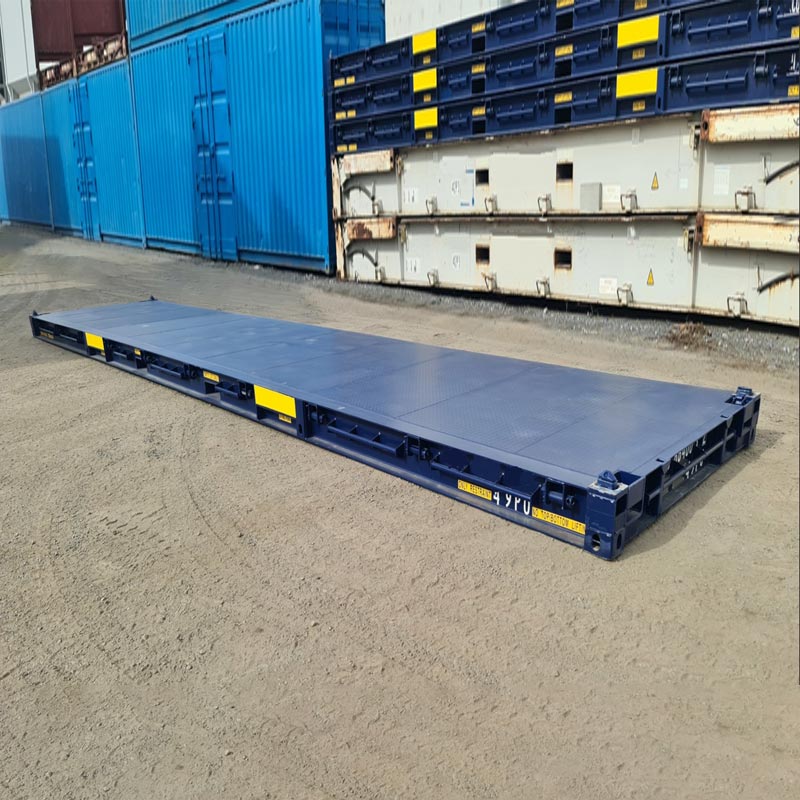
40Ft Platform Container
Container Family is a leading China 40ft platform container manufacturer. The 40Ft Platform container is a special type of container. The deck is 48,0 cm high and equipped with a steel floor. This makes the platform extra strong, with a payload of more than 40.520 kg. The 40ft platform container is therefore the perfect solution for the transportation of cargo that does not fit in regular containers. At Container Family Factory, we specialize in offering professional 40Ft platform containers, ensuring they meet the highest quality standards for our clients' shipping and storage needs.
Bulk Shipping Container
High quality bulk shipping container is offered by China manufacturer Container Family. Bulk shipping container, also known as bulk storage container, or simply bulk container, have been widely adopted across various industries. Container Family’s bulk shipping container, in particular, have found extensive application in sectors such as chemical and agriculture. These containers efficiently facilitate the transportation and storage of bulk materials, ensuring seamless logistics and operational efficiency for businesses in these domains.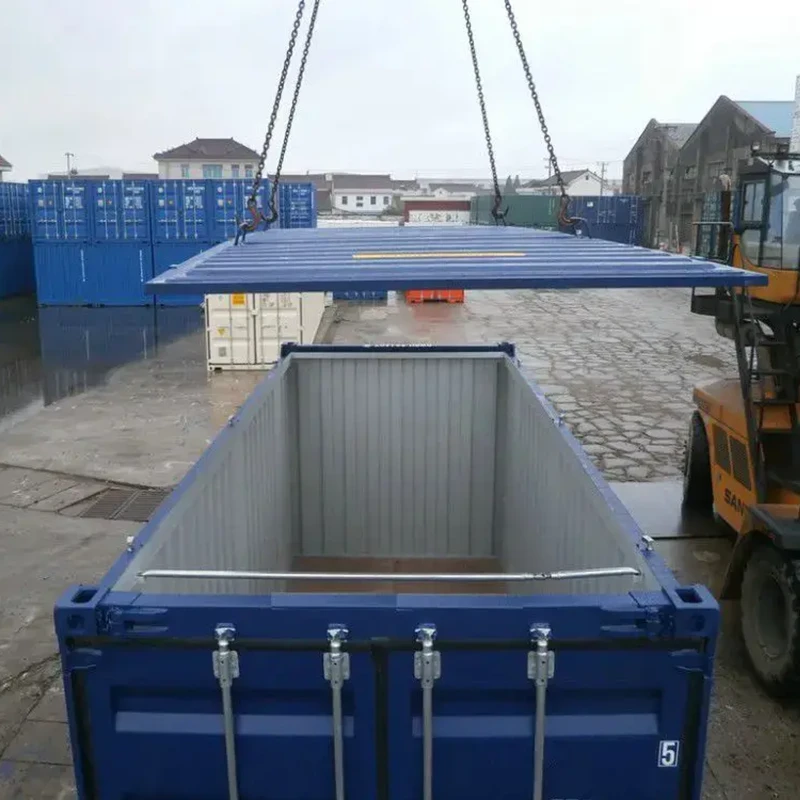
Hard-top Shipping Container
Container Family has more than 10 years of experience in special containers,the hard-top shipping container has a removable steel roof and movable rear top rail,which allows the container can be loaded from above.We also provide customization service for this style.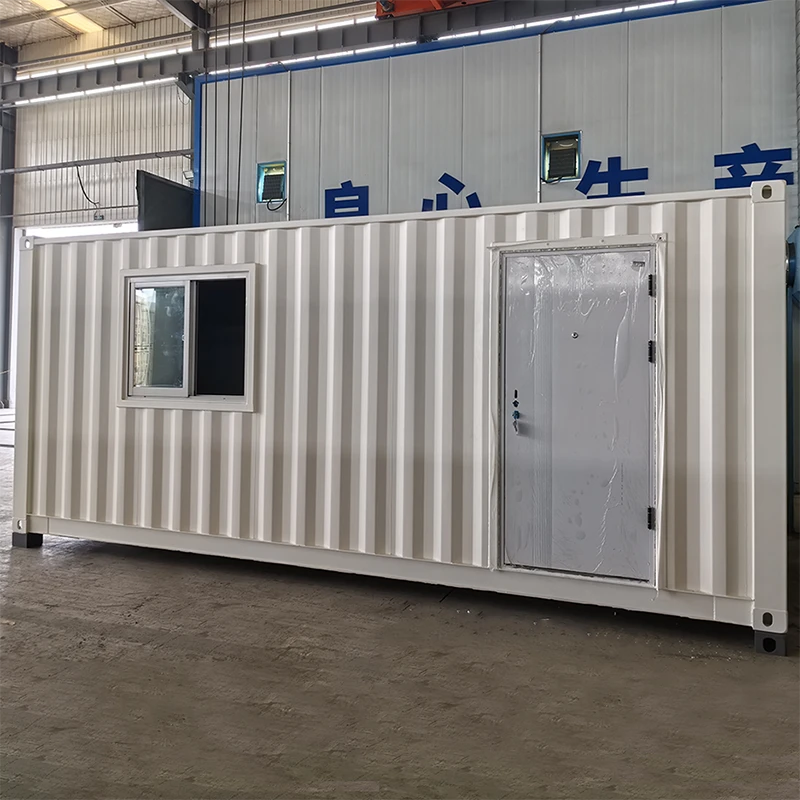
20ft Office Container
This high-quality 20ft office container is a fully prefabricated site cabin produced by Container Family,which is designed for construction widely such as mining sites,temporary project offices and field work stations. Custom size, double-story layout and interior decoration are available from our factory.
- Related Blog
- Reviews

Send Inquiry



X
We use cookies to offer you a better browsing experience, analyze site traffic and personalize content. By using this site, you agree to our use of cookies.
Privacy Policy