

- English
 简体中文
简体中文 Español
 Português
 русский
 Français
 日本語
日本語 Deutsch
 tiếng Việt
 Italiano
 Nederlands
 ภาษาไทย
 Polski
 한국어
한국어 Svenska
 magyar
 Malay
Malay বাংলা ভাষার
 Dansk
Dansk Suomi
Suomi हिन्दी
 Pilipino
 Türkçe
 Gaeilge
 العربية
 Indonesia
 Norsk
Norsk تمل
تمل český
český ελληνικά
 український
 Javanese
 فارسی
فارسی தமிழ்
தமிழ் తెలుగు
 नेपाली
 Burmese
 български
 ລາວ
ລາວ Latine
 Қазақша
 Euskal
 Azərbaycan
 Slovenský jazyk
 Македонски
 Lietuvos
 Eesti Keel
 Română
 Slovenski
 मराठी
मराठी

How Do Open Platform Containers Reshape the Efficiency of Heavy-Cargo Logistics?
Driven by the rapid development of high-end equipment manufacturing, large-scale infrastructure, and new energy industries, the global demand for cross-border transportation of oversized, overweight, and irregular cargo continues to grow. Restricted by closed side and top structures, standard shipping containers can only accommodate regular-sized goods. They are often unable to load ultra-wide, ultra-high, and super-long mechanical equipment, steel structures, and other non-standard cargo, resulting in common problems such as limited loading space, mandatory equipment disassembly, difficult loading and unloading, and high logistics costs. These bottlenecks greatly hinder the efficiency and stability of heavy-cargo shipping. Against this backdrop, open platform containers have become an upgraded solution for special logistics, reshaping industry efficiency with their open structure and strong heavy-load adaptability.
Core Bottlenecks Restricting Traditional Heavy-Cargo Logistics
Traditional logistics solutions can hardly meet the upgrading demands of modern supply chains, mainly due to three typical drawbacks:
1. Severe Loading Limitations: Standard containers feature fixed enclosed space and cannot fit oversized and irregular cargo. Large equipment often requires disassembly and separate shipment, bringing extra labor costs and higher risk of product damage.
2. Low Loading and Unloading Efficiency: Traditional containers only allow cargo handling through end doors. Lifting and positioning heavy equipment is extremely difficult and time-consuming, greatly extending the overall logistics cycle.
3. High Comprehensive Transportation Costs: Cargo disassembly, secondary packaging, and multi-container shipment generate additional expenses for materials and labor. Occupying more transport resources also reduces overall logistics cost performance.
Structural Innovation Breaks Space Limitations for Heavy Cargo
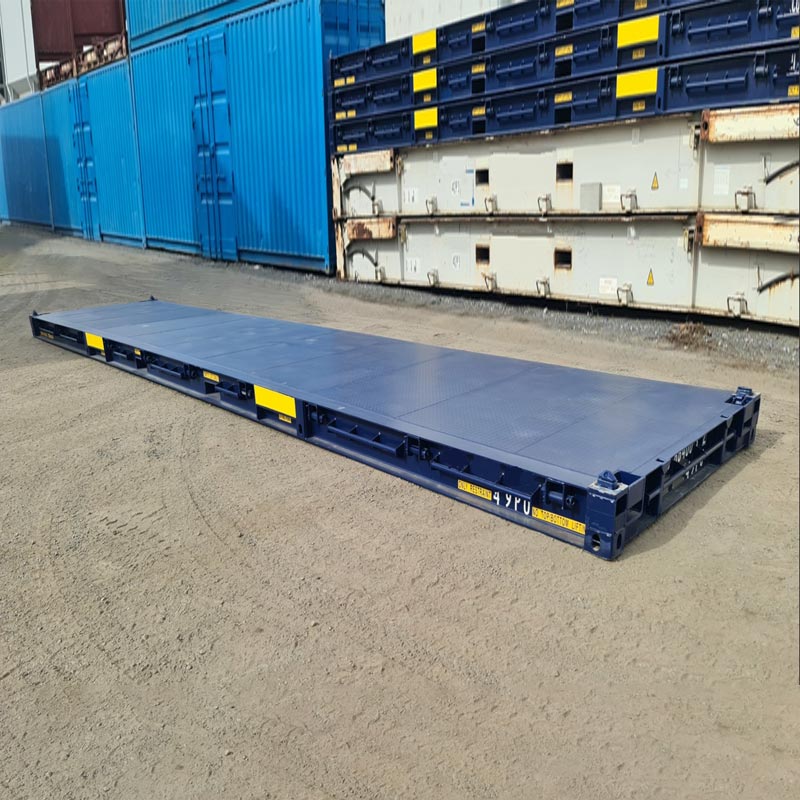
Different from standard containers and conventional flat rack containers, the 40Ft Platform Container launched by Container Family adopts an open flat deck design without side walls. It completely removes traditional space restrictions and provides a reliable solution for non-standard heavy cargo transportation. Unlike flat rack containers with collapsible end walls, platform containers feature a simpler, more stable structure with no movable parts for higher operational safety.
Equipped with a 480mm high-strength steel deck, the container delivers excellent structural rigidity and load-bearing performance. It supports one-piece shipment of heavy equipment without disassembly, greatly simplifying logistics procedures and improving overall transportation efficiency.
Professional Technical Parameters Ensure Stable Heavy-Duty Transportation
With industrial-grade standardized configurations, the 40Ft Platform Container achieves perfect balance of heavy load capacity, stability and safety, fully adapting to global multimodal transportation scenarios. Its core specifications are as follows:
1. Super Heavy Load Capacity: Max gross weight reaches 45,000 KG, with a maximum payload of 40,520 KG, fully meeting the transportation demands for heavy industrial equipment and steel structures.
2. International Standard Dimensions: External size: 12,192mm × 2,438mm × 480mm. The standardized size is universally compatible with most global ports, yards and transport vehicles.
3. Optimized Tare Weight: The container tare weight is only 4,480 KG. While maintaining high structural strength and load capacity, it reduces dead weight occupation and maximizes effective cargo volume.
Multi-Dimensional Upgrades Realize Logistics Cost Reduction and Efficiency Improvement
The open platform container optimizes the entire heavy-cargo logistics chain in terms of handling, packaging, transportation and application scenarios, bringing comprehensive efficiency upgrades:
1. Greatly Improved Loading Efficiency: The side-wall-free open structure allows multi-directional lifting and loading from the top and sides, instead of limited end-door operation. It simplifies cargo positioning and fixing, and shortens yard operation time significantly.
2. Lower Packaging and Labor Costs: Complex closed packaging and reinforcement procedures are no longer required. It reduces the use of packaging materials and eliminates repeated disassembly and assembly work, effectively cutting operational costs.
3. Strong Multi-Scenario Versatility: Suitable for sea and land multimodal transport. In addition to oversized cargo transportation, it can be used as temporary walkways and bridge structures by connecting with other containers via twist locks, enabling fast and affordable temporary construction and improving resource utilization.
4. Higher Cargo Safety: The flat and rigid steel deck ensures stable cargo placement and fixing. It effectively prevents shaking, offset and collision risks during transit, ensuring intact cargo delivery.
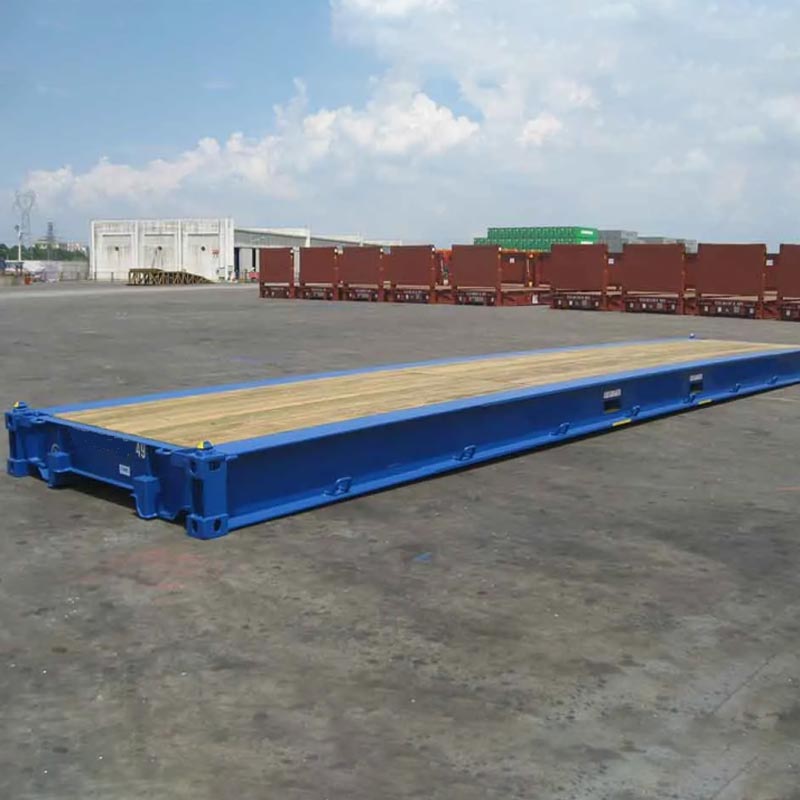
Industry Trend: Open Platform Containers Become the New Mainstream of Special Logistics
With the booming export of large-scale equipment and the growing demand for customized non-standard logistics, traditional enclosed container transportation can no longer adapt to industrial upgrading. Open platform containers, featuring strong load capacity, open space, efficient handling and low operational costs, perfectly match the cross-border transportation needs of new energy, heavy industry, infrastructure and high-end manufacturing industries.
The Container Family 40Ft Platform Container solves the core pain points of heavy-cargo logistics — limited space, high costs and low efficiency — through standardized specifications, high-strength steel structure and innovative open design. It continuously empowers the global special logistics supply chain with more efficient, stable and cost-effective transportation solutions. Contact us for more details!
Send Inquiry



X
We use cookies to offer you a better browsing experience, analyze site traffic and personalize content. By using this site, you agree to our use of cookies.
Privacy Policy