

- English
 简体中文
 Español
 Português
 русский
 Français
 日本語
 Deutsch
 tiếng Việt
 Italiano
 Nederlands
 ภาษาไทย
 Polski
 한국어
 Svenska
 magyar
 Malay
 বাংলা ভাষার
 Dansk
 Suomi
 हिन्दी
 Pilipino
 Türkçe
 Gaeilge
 العربية
 Indonesia
 Norsk
 تمل
 český
 ελληνικά
 український
 Javanese
 فارسی
 தமிழ்
 తెలుగు
 नेपाली
 Burmese
 български
 ລາວ
 Latine
 Қазақша
 Euskal
 Azərbaycan
 Slovenský jazyk
 Македонски
 Lietuvos
 Eesti Keel
 Română
 Slovenski
 मराठी

Which Hydraulic Side-opening Container Design Meets Modern Cargo Handling Needs?
A Hydraulic Side-opening Container is designed to provide convenient side access to cargo through a hydraulically operated opening structure. Unlike conventional containers that mainly rely on end doors, this design can create a much wider loading and unloading area, making it easier to handle bulky equipment, large goods, industrial products, and exhibition materials.
This article explores how hydraulic side-opening containers work, their main structural components, operational advantages, practical applications, and important purchasing considerations. It also explains how to evaluate hydraulic systems, door configurations, structural strength, safety features, and customization requirements before choosing a suitable container for your business.
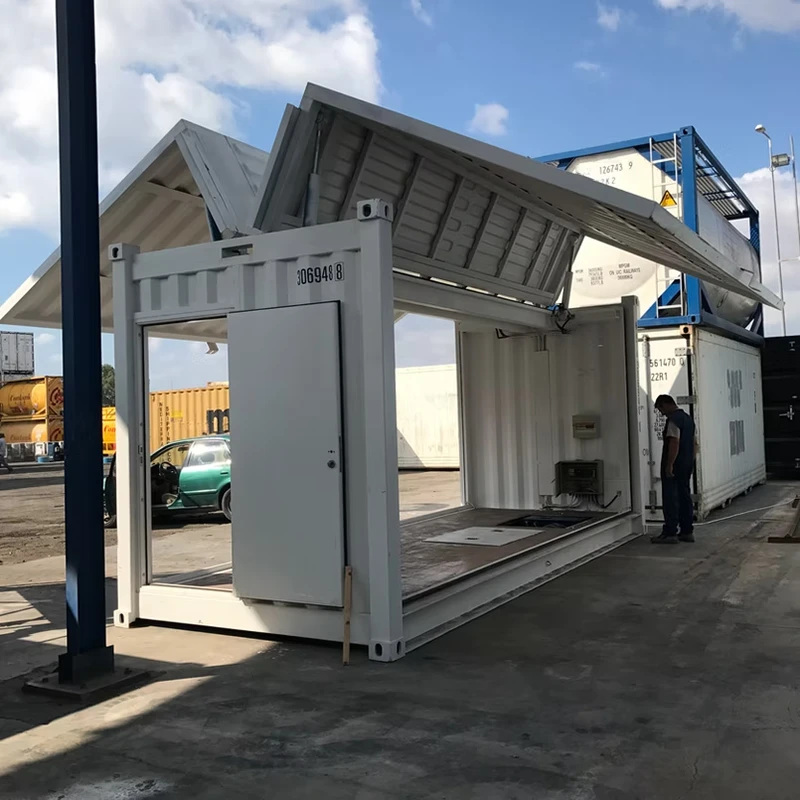
Table of Contents
- Which Hydraulic Side-opening Container Design Meets Modern Loading Needs?
- How Does a Hydraulic Side-opening Container Work?
- What Are the Main Structural Components?
- Which Advantages Make Hydraulic Side-opening Containers Valuable?
- Where Are Hydraulic Side-opening Containers Commonly Used?
- How Does a Hydraulic Side-opening Container Compare with a Standard Container?
- What Factors Should Buyers Consider Before Purchasing?
- How Can You Maintain a Hydraulic Side-opening Container?
- What Safety Measures Should Operators Follow?
- Why Choose a Professional Container Manufacturer?
- Frequently Asked Questions
1. Which Hydraulic Side-opening Container Design Meets Modern Loading Needs?
In logistics, industrial transportation, and temporary storage, convenient cargo access is just as important as storage capacity. Traditional shipping containers are widely used because of their durability and standardized dimensions. However, their end-opening design can create operational challenges when handling large, heavy, or irregularly shaped cargo.
A Hydraulic Side-opening Container addresses this challenge by incorporating a hydraulically operated side-opening structure. Depending on the design, one or more large side panels can be raised, lowered, or moved to expose a substantial portion of the container's interior.
The opening mechanism reduces dependence on narrow end-door access. Operators can approach the cargo from the side, improving visibility and making it easier to position equipment or arrange products inside the container.
Different configurations are available depending on the intended application. Some designs use upward-opening hydraulic side panels, while others feature hydraulically operated folding or movable door structures. The opening direction, panel dimensions, and hydraulic arrangement should be selected according to the available working space and cargo requirements.
Key consideration: A hydraulic side-opening design is not simply a conventional container with a larger door. Its supporting frame, moving panels, hydraulic equipment, locking arrangement, and load-bearing structure must work together as an integrated system.
2. How Does a Hydraulic Side-opening Container Work?
The main operating principle is based on hydraulic power. A hydraulic system converts mechanical energy into controlled movement, allowing heavy side panels to open and close with less manual effort.
2.1 Hydraulic Power Generation
A typical hydraulic arrangement includes a power unit, hydraulic pump, oil reservoir, control valves, hoses, and hydraulic cylinders. The power source may be an electric motor, an external power supply, or another configuration specified by the manufacturer.
When the operator activates the control system, the pump supplies pressurized hydraulic fluid to the cylinders. The cylinders extend or retract to move the side-opening panels according to the designed movement path.
2.2 Opening and Closing Process
The operating process generally follows several stages:
- Preparation: Position the container on a suitable, stable surface and confirm that the opening area is clear.
- Safety inspection: Check the door locks, hydraulic connections, operating controls, and surrounding conditions.
- Unlocking: Release the mechanical locking devices according to the manufacturer's instructions.
- Hydraulic activation: Operate the hydraulic control system to move the side panels.
- Loading or unloading: Access the interior through the expanded side opening using suitable handling equipment.
- Closing and securing: Return the panels to their closed position, engage the mechanical locks, and check the seals.
2.3 Why Hydraulic Operation Matters
Large container panels can be heavy and difficult to operate manually. Hydraulic assistance provides controlled movement and can reduce the physical effort required from operators.
It also makes repeated opening and closing more practical in applications where frequent cargo access is necessary. However, operating speed and lifting capacity depend on the hydraulic system design, panel weight, cylinder specifications, and control settings.
3. What Are the Main Structural Components?
Reliable performance depends on the coordination of several mechanical and structural components. Buyers should understand these parts before evaluating different products.
3.1 Main Container Frame
The frame provides the primary structural support for the container. It generally includes corner posts, top and bottom rails, cross-members, and other reinforced sections. Because a large side opening changes the conventional wall arrangement, the supporting structure must be appropriately engineered to maintain stability and strength.
3.2 Hydraulic Cylinders
Hydraulic cylinders generate the force required to move the side panels. Their specifications should match the weight, dimensions, and movement requirements of the opening structure.
Important considerations include cylinder capacity, stroke length, mounting positions, operating pressure, and resistance to environmental conditions.
3.3 Hydraulic Power Unit
The hydraulic power unit supplies the energy needed to operate the system. Its configuration should provide sufficient power for smooth and controlled movement. The location of the unit should also allow convenient inspection and maintenance.
3.4 Side Panels and Hinges
The side panels form the movable opening structure. Their materials, thickness, reinforcement, hinge design, and surface treatment influence durability and operating performance.
3.5 Locking and Sealing Systems
After closing, the side panels must be properly secured. Mechanical locks prevent unintended movement, while suitable seals help protect the interior from rain, dust, and external moisture.
| Component | Main Function | What Buyers Should Check |
|---|---|---|
| Container frame | Supports the overall structure | Material, reinforcement, welding quality |
| Hydraulic cylinders | Drive panel movement | Capacity, stroke, mounting arrangement |
| Hydraulic power unit | Supplies hydraulic power | Power source, pressure, serviceability |
| Side panels | Provide the opening and enclosure | Dimensions, thickness, reinforcement |
| Hinges and connections | Guide and support movement | Alignment, strength, wear resistance |
| Locks and seals | Secure and protect the enclosure | Locking reliability, sealing performance |
| Control system | Controls hydraulic operation | Ease of operation, protection, accessibility |
4. Which Advantages Make Hydraulic Side-opening Containers Valuable?
For businesses that frequently handle bulky cargo or require flexible access, a hydraulic side-opening design can provide several practical advantages.
4.1 Wider Cargo Access
The most obvious benefit is the expanded side access. Instead of moving all goods through a relatively narrow end opening, operators can access a larger section of the container from its long side.
This is particularly useful for large machinery, oversized equipment, industrial assemblies, and products that are difficult to maneuver through standard container doors.
4.2 More Convenient Loading and Unloading
Side access allows suitable forklifts and other handling equipment to approach cargo from a different direction. Depending on the site layout, this can simplify loading operations and reduce unnecessary repositioning.
4.3 Better Interior Visibility
When the side panels are fully opened, operators can see a larger portion of the interior. This makes cargo inspection, stock organization, and equipment placement more convenient.
4.4 Reduced Manual Handling
Hydraulic assistance makes it easier to move large side panels compared with relying entirely on manual operation. This can improve operational convenience, especially when the opening system is used frequently.
4.5 Flexible Commercial Applications
Beyond transportation and storage, hydraulic side-opening containers can be adapted for exhibition spaces, mobile showrooms, temporary service facilities, and other commercial projects.
Business value: The greatest advantage is not simply a larger opening. It is the ability to match the container's access design with actual cargo-handling processes and working conditions.
5. Where Are Hydraulic Side-opening Containers Commonly Used?
Their flexible opening structure makes these containers suitable for different industries and operating environments.
5.1 Industrial Equipment Transportation
Manufacturing companies often need to transport machinery, mechanical assemblies, production equipment, and large components. Side access can simplify the positioning of these products, particularly when conventional end-door loading is inconvenient.
5.2 Warehousing and Logistics
Distribution centers and logistics companies may use side-opening containers for cargo that requires frequent access. The wider opening can support easier inventory checks and more flexible loading arrangements.
5.3 Construction and Engineering Projects
Construction projects frequently involve transporting tools, equipment, building materials, and prefabricated components. A side-opening structure can make it easier to retrieve specific materials without rearranging the entire cargo space.
5.4 Exhibitions and Mobile Showrooms
Hydraulic side-opening containers can also serve as temporary exhibition or display units. When the side structure opens, it can expose the interior to visitors and create a more accessible presentation area.
5.5 Mobile Commercial Facilities
Depending on the structural design and customization, these containers can be adapted into mobile retail spaces, promotional facilities, temporary service stations, and other commercial environments.
| Industry | Typical Cargo or Use | Potential Benefit |
|---|---|---|
| Manufacturing | Machinery and industrial components | Convenient equipment access |
| Logistics | Palletized products and bulk goods | Flexible loading arrangements |
| Construction | Tools and building materials | Easier cargo retrieval |
| Exhibitions | Display equipment and promotional products | Open and accessible presentation space |
| Retail | Merchandise and mobile displays | Flexible commercial access |
6. How Does a Hydraulic Side-opening Container Compare with a Standard Container?
Both container types provide enclosed cargo space, but their access structures and operating methods are different. Understanding these differences helps buyers select a suitable solution.
| Comparison | Hydraulic Side-opening Container | Standard Shipping Container |
|---|---|---|
| Access design | Hydraulically operated side opening | Mainly end-door access |
| Opening operation | Hydraulic-assisted | Generally manual |
| Cargo accessibility | Wider lateral access, depending on configuration | Access primarily through the end |
| Loading flexibility | Suitable for side-loading operations | Best suited to end-loading operations |
| Mechanical complexity | More hydraulic and moving components | Relatively simple door arrangement |
| Maintenance | Requires hydraulic and mechanical inspections | Focuses mainly on doors, seals, and structure |
| Typical applications | Bulky cargo, equipment, exhibitions | General cargo transportation and storage |
A standard container may be the more economical choice when cargo can be loaded efficiently through the end doors. However, when side access is essential, the hydraulic version can provide greater operational flexibility.
Buyers should also remember that a hydraulic side-opening structure may affect tare weight, payload, structural design, and transportation compatibility. These values must be confirmed through the manufacturer's actual specifications rather than assumed to be identical to those of a standard container.
7. What Factors Should Buyers Consider Before Purchasing?
Choosing a hydraulic side-opening container requires more than comparing the initial purchase price. The following factors can help buyers avoid unsuitable configurations and unnecessary operating costs.
7.1 Container Dimensions and Opening Size
First, determine the required container length, width, height, and usable interior space. More importantly, confirm the actual clear side-opening dimensions.
A large exterior container does not automatically provide an equally large usable opening. Hinges, supporting posts, panel arrangements, and other structural elements may affect the available access area.
7.2 Cargo Weight and Dimensions
Provide the supplier with detailed information about the cargo, including its length, width, height, total weight, and weight distribution.
For heavy machinery, also explain whether the cargo will be placed on wheels, skids, pallets, or support frames. Concentrated loads may require additional floor reinforcement.
7.3 Hydraulic System Specifications
Ask about the hydraulic cylinder configuration, operating pressure, power supply, control method, and emergency operating arrangements.
The hydraulic system should be designed for the actual weight and movement requirements of the side panels. Undersized equipment may result in poor operation, while inappropriate pressure settings can create unnecessary mechanical stress.
7.4 Structural Strength and Material Quality
The large side opening changes the structural arrangement of the container. Therefore, buyers should pay particular attention to frame reinforcement, corner posts, supporting beams, welding quality, and panel connections.
For transportation applications, request relevant structural documentation and confirmation of applicable transportation approvals. Do not assume that every customized side-opening unit automatically retains standard intermodal certification.
7.5 Weatherproofing and Corrosion Protection
Containers used outdoors may face rain, humidity, dust, salt air, and temperature changes. The side-opening system should include suitable sealing arrangements and corrosion protection.
Ask the manufacturer about steel surface preparation, coating systems, sealing materials, and maintenance recommendations.
7.6 Installation and Operating Environment
Check the space available around the container. Depending on the opening direction, the side panels may require significant clearance when fully opened.
Also confirm the power supply, ground conditions, transportation method, and equipment needed for installation and operation.
7.7 Customization and After-Sales Support
Some projects require special dimensions, different opening directions, customized hydraulic controls, reinforced floors, or additional electrical equipment.
Choose a supplier that can evaluate your application and provide clear technical communication before production. Spare parts availability and after-sales support are also important for long-term use.
Purchasing tip: Before requesting a quotation, prepare your cargo dimensions, required opening size, intended application, installation location, power requirements, and expected operating frequency. Detailed information helps manufacturers recommend a more accurate configuration.
8. How Can You Maintain a Hydraulic Side-opening Container?
Regular maintenance helps preserve structural reliability and reduce unexpected downtime. Since this container combines a steel enclosure with a hydraulic operating system, both mechanical and hydraulic components need attention.
8.1 Inspect Hydraulic Hoses and Connections
Check hoses, fittings, and hydraulic connections for leakage, cracks, abrasion, or other visible damage. Replace defective components according to the manufacturer's maintenance requirements.
8.2 Check Hydraulic Fluid
Maintain the hydraulic fluid at the specified level and use the recommended fluid type. Contaminated or unsuitable hydraulic oil may affect system performance and component service life.
8.3 Inspect Cylinders and Moving Parts
Look for abnormal cylinder movement, corrosion, damaged seals, unusual noise, or uneven panel movement. Hinges and pivot points should also be inspected for wear and alignment.
8.4 Maintain Door Seals and Locks
Inspect the sealing strips, locking rods, handles, and other securing devices. Replace damaged seals and ensure that all locking components engage correctly.
8.5 Protect the Steel Structure
Clean accumulated dirt and moisture from the container surface. Repair damaged protective coatings promptly to reduce corrosion, particularly around welds, joints, and exposed edges.
8.6 Keep Maintenance Records
Record inspection dates, hydraulic fluid changes, replacement parts, repairs, and any abnormal operating conditions. A documented maintenance history makes it easier to identify recurring problems and plan preventive servicing.
9. What Safety Measures Should Operators Follow?
Hydraulic side-opening containers involve heavy moving panels and pressurized hydraulic components. Proper operating procedures are essential for protecting workers and equipment.
- Use a stable installation surface: Ensure the container is properly supported and positioned according to the manufacturer's requirements.
- Maintain an exclusion zone: Keep workers and bystanders away from the movement path of the opening panels.
- Check locking devices: Confirm that all required mechanical locks are released before operation and secured after closing.
- Avoid unauthorized operation: Only trained personnel should operate the hydraulic controls.
- Never work beneath an unsupported panel: Use the specified mechanical supports or safety devices whenever maintenance requires access beneath raised structures.
- Inspect the surroundings: Check for overhead obstructions, strong winds, nearby vehicles, and other environmental hazards.
- Follow loading limits: Never exceed the rated capacity of the container, floor, hydraulic equipment, or lifting system.
- Follow emergency procedures: Understand the manufacturer's instructions for power failure, hydraulic malfunction, and emergency shutdown.
Safety procedures should always be based on the actual container design and the operating manual supplied by the manufacturer. A customized hydraulic system may have specific operating and maintenance requirements.
10. Why Choose a Professional Container Manufacturer?
A hydraulic side-opening container is a specialized product that combines structural engineering, hydraulic technology, material selection, and manufacturing quality. Working with an experienced manufacturer helps ensure that these elements are properly coordinated.
Container Family (Qingdao) Intelligent Technology Co., Ltd. provides a professional manufacturing option for customers seeking container solutions for different commercial and industrial applications.
When evaluating a manufacturer, international buyers should consider the following points:
- Engineering capability: The manufacturer should understand structural requirements and hydraulic operating principles.
- Customization experience: Different projects may require special dimensions, door configurations, materials, or functional arrangements.
- Manufacturing quality: Welding, surface treatment, component installation, and assembly should follow controlled production procedures.
- Technical communication: Clear drawings, specifications, and project discussions help reduce misunderstandings.
- Quality inspection: The completed product should undergo appropriate checks of its structure, hydraulic operation, locking system, and overall condition.
For overseas buyers, it is also important to confirm production lead time, packaging arrangements, shipping dimensions, delivery terms, and the availability of technical support before placing an order.
The right manufacturer should do more than supply a container. It should help customers identify the most suitable structure and operating configuration for their actual project requirements.
11. Frequently Asked Questions About Hydraulic Side-opening Containers
Q1. What is a Hydraulic Side-opening Container?
A Hydraulic Side-opening Container is a specialized container equipped with a hydraulically operated side-opening structure. It provides wider access to the interior, making it suitable for handling bulky cargo, machinery, industrial products, and other goods that are difficult to load through conventional end doors.
Q2. How does the hydraulic opening system operate?
The system generally uses a hydraulic pump, control valves, hydraulic fluid, and cylinders to move the side panels. Depending on the design, the panels can open upward, downward, or through another engineered movement arrangement.
Q3. Can a hydraulic side-opening container be customized?
Yes. Depending on the manufacturer's capabilities, customers may request customized dimensions, opening arrangements, hydraulic systems, floor structures, electrical configurations, and additional functional equipment.
Q4. What types of cargo can be loaded into this container?
Typical applications include industrial machinery, equipment, large components, palletized products, building materials, and exhibition equipment. The actual cargo suitability depends on the container's dimensions, floor capacity, opening clearance, and rated payload.
Q5. Does the hydraulic system require an external power supply?
It depends on the hydraulic power unit configuration. Some systems use an external electrical supply, while others may be designed for different power arrangements. Buyers should confirm the voltage, frequency, power requirements, and connection method with the manufacturer.
Q6. Is a hydraulic side-opening container suitable for outdoor use?
It can be designed for outdoor applications with suitable materials, protective coatings, drainage arrangements, and weather-resistant seals. Buyers should specify the intended environment, including humidity, rainfall, temperature, and potential exposure to corrosive conditions.
Q7. How often should the hydraulic system be maintained?
Maintenance frequency depends on operating frequency, environmental conditions, system design, and manufacturer recommendations. Regular inspections should cover hydraulic fluid, hoses, cylinders, connections, hinges, and control components.
Q8. What should buyers provide when requesting a quotation?
Buyers should provide the required container dimensions, cargo size and weight, intended application, preferred opening arrangement, power supply conditions, installation environment, and estimated order quantity. Drawings or reference photographs can also help clarify project requirements.
Q9. Is a hydraulic side-opening container suitable for international transportation?
It depends on the specific design and applicable transportation requirements. Buyers should confirm the container's dimensions, gross mass, corner fittings, lifting arrangements, and relevant certification or shipping approvals with the manufacturer and transportation provider before shipment.
Q10. What affects the price of a hydraulic side-opening container?
Pricing is influenced by container dimensions, structural materials, opening configuration, hydraulic components, customization requirements, surface treatment, quantity, and delivery arrangements. A detailed technical specification is necessary for an accurate quotation.
Looking for a Reliable Hydraulic Side-opening Container Manufacturer?
The right container design can improve cargo accessibility, simplify loading operations, and support more flexible industrial and commercial applications.
Container Family (Qingdao) Intelligent Technology Co., Ltd. welcomes inquiries from global distributors, project contractors, logistics companies, and industrial buyers.
Whether you need a customized container solution, technical specifications, or a bulk order quotation, our team is ready to discuss your requirements.
Contact us today to share your project details and explore a hydraulic side-opening container solution that matches your business needs.
Previous:The Story of Shipping Container
Send Inquiry



X
We use cookies to offer you a better browsing experience, analyze site traffic and personalize content. By using this site, you agree to our use of cookies.
Privacy Policy