

- English
 简体中文
简体中文 Español
 Português
 русский
 Français
 日本語
日本語 Deutsch
 tiếng Việt
 Italiano
 Nederlands
 ภาษาไทย
 Polski
 한국어
한국어 Svenska
 magyar
 Malay
Malay বাংলা ভাষার
 Dansk
Dansk Suomi
Suomi हिन्दी
 Pilipino
 Türkçe
 Gaeilge
 العربية
 Indonesia
 Norsk
Norsk تمل
تمل český
český ελληνικά
 український
 Javanese
 فارسی
فارسی தமிழ்
தமிழ் తెలుగు
 नेपाली
 Burmese
 български
 ລາວ
ລາວ Latine
 Қазақша
 Euskal
 Azərbaycan
 Slovenský jazyk
 Македонски
 Lietuvos
 Eesti Keel
 Română
 Slovenski
 मराठी
मराठी

How Platform Container Enhances Cargo Efficiency and Safety in Modern Logistics
Abstract
In modern logistics and heavy cargo transportation, choosing the right container solution is critical to ensuring operational efficiency, cargo safety, and cost control. The Platform Container has emerged as a versatile and robust option, especially for oversized, heavy, or irregularly shaped goods. This article provides a comprehensive overview of how platform containers improve cargo handling, reduce risks, and streamline global shipping operations. It addresses key customer concerns such as load capacity, flexibility, compliance, and cost-effectiveness while offering practical guidance for selection and use.
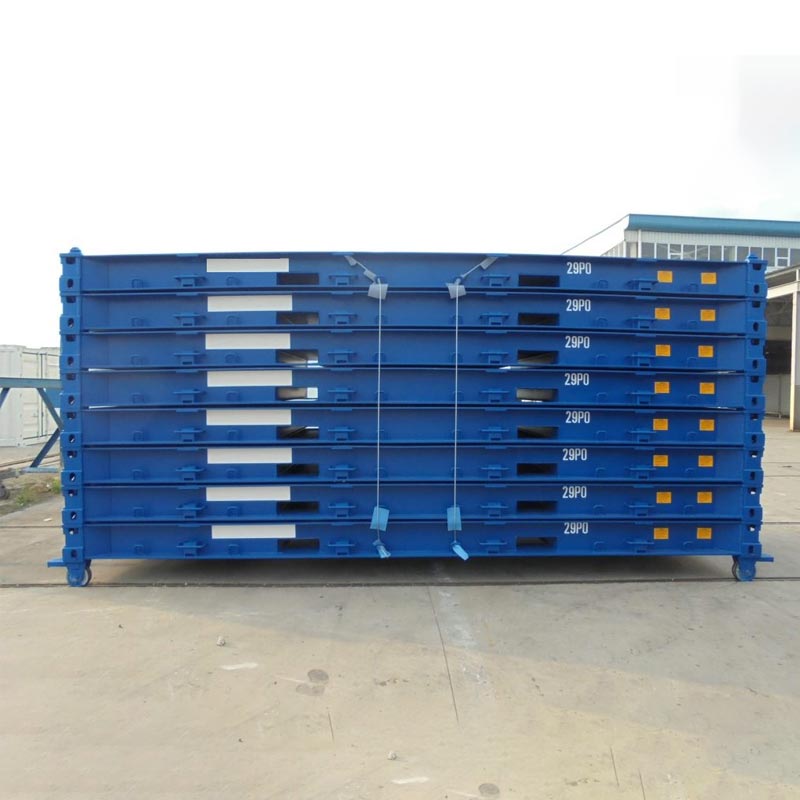
Table of Contents
- 1. What Is a Platform Container?
- 2. How Does a Platform Container Work?
- 3. Key Advantages of Platform Containers
- 4. Typical Applications and Use Cases
- 5. Platform Container vs Other Container Types
- 6. How to Choose the Right Platform Container
- 7. Best Practices for Safe Loading and Transport
- 8. Common Customer Pain Points Solved
- 9. FAQ
1. What Is a Platform Container?
A Platform Container is a specialized shipping container consisting of a reinforced base structure without side walls or a roof. Unlike standard containers, it provides an open platform designed to carry heavy, oversized, or irregular cargo that cannot fit within enclosed units.
These containers are engineered with high-strength steel frames and robust flooring systems, enabling them to withstand extreme weight loads while maintaining structural integrity during transportation.
- No side walls or roof
- High load-bearing capacity
- Ideal for oversized cargo
- Compatible with standard transport systems
2. How Does a Platform Container Work?
Platform containers function as a stable base for cargo that exceeds standard dimensional limits. Goods are placed directly onto the flatbed surface and secured using lashing rings, chains, or straps.
The absence of walls allows cranes and forklifts to load cargo from multiple angles, significantly improving operational efficiency. Once loaded, the container can be transported via ships, trucks, or rail systems without requiring repackaging.
3. Key Advantages of Platform Containers
3.1 Exceptional Load Capacity
Platform containers are designed to handle extremely heavy loads, often exceeding the limits of standard containers. This makes them suitable for industrial machinery, construction materials, and large equipment.
3.2 Flexibility in Cargo Dimensions
Without side restrictions, these containers accommodate irregular shapes and oversized cargo, eliminating the need for disassembly or custom packaging.
3.3 Efficient Loading and Unloading
Open access enables faster handling using cranes or forklifts, reducing labor time and operational delays.
3.4 Cost Optimization
By eliminating the need for special transport solutions or cargo modification, platform containers reduce overall logistics costs.
4. Typical Applications and Use Cases
Platform containers are widely used across multiple industries where standard containers fall short.
- Heavy machinery transport
- Construction equipment
- Steel structures and pipes
- Wind turbine components
- Large vehicles and industrial units
5. Platform Container vs Other Container Types
| Container Type | Structure | Best Use Case | Limitations |
|---|---|---|---|
| Platform Container | Flat base only | Oversized/heavy cargo | No protection from weather |
| Flat Rack Container | End walls only | Heavy cargo with some support | Limited side access |
| Standard Container | Fully enclosed | General cargo | Size restrictions |
6. How to Choose the Right Platform Container
Selecting the appropriate platform container requires careful evaluation of several factors:
- Weight Capacity: Ensure the container supports your cargo load.
- Dimensions: Match container size with cargo specifications.
- Material Strength: Look for high-quality steel construction.
- Compliance: Verify adherence to international shipping standards.
- Supplier Reliability: Choose a trusted manufacturer like Container.
A reliable supplier ensures product durability, certification compliance, and consistent performance across logistics operations.
7. Best Practices for Safe Loading and Transport
- Distribute weight evenly across the platform
- Use certified lashing equipment
- Inspect container structure before loading
- Follow international cargo securing guidelines
- Conduct pre-transport safety checks
Proper handling reduces the risk of cargo damage, transportation delays, and safety hazards.
8. Common Customer Pain Points Solved
Problem 1: Cargo Too Large for Standard Containers
Solution: Platform containers eliminate dimensional constraints, allowing direct transport without modification.
Problem 2: High Transportation Costs
Solution: Reduced need for specialized equipment lowers overall expenses.
Problem 3: Risk of Cargo Damage
Solution: Strong base structure and proper securing methods enhance stability.
Problem 4: Complex Loading Operations
Solution: Open design simplifies handling and reduces operational time.
9. FAQ
What types of cargo are best suited for platform containers?
Oversized, heavy, and irregularly shaped cargo such as machinery, steel structures, and industrial equipment are ideal.
Are platform containers safe for international shipping?
Yes, when properly secured and compliant with international regulations, they are widely used in global logistics.
Can platform containers be stacked?
In most cases, platform containers are not designed for stacking when loaded due to cargo dimensions and safety considerations.
Do platform containers protect cargo from weather?
No, additional coverings or protective measures are required for weather-sensitive goods.
Conclusion
Platform containers play a vital role in modern logistics by providing a flexible, durable, and cost-effective solution for transporting oversized and heavy cargo. Their open structure, high load capacity, and operational efficiency make them indispensable across industries.
If you are looking for reliable and high-performance platform container solutions, Container offers industry-grade products tailored to meet diverse transportation needs.
Ready to optimize your cargo transportation strategy? Contact us today to get expert guidance and customized solutions that fit your business requirements.
Send Inquiry



X
We use cookies to offer you a better browsing experience, analyze site traffic and personalize content. By using this site, you agree to our use of cookies.
Privacy Policy