

- English
 简体中文
简体中文 Español
 Português
 русский
 Français
 日本語
日本語 Deutsch
 tiếng Việt
 Italiano
 Nederlands
 ภาษาไทย
 Polski
 한국어
한국어 Svenska
 magyar
 Malay
Malay বাংলা ভাষার
 Dansk
Dansk Suomi
Suomi हिन्दी
 Pilipino
 Türkçe
 Gaeilge
 العربية
 Indonesia
 Norsk
Norsk تمل
تمل český
český ελληνικά
 український
 Javanese
 فارسی
فارسی தமிழ்
தமிழ் తెలుగు
 नेपाली
 Burmese
 български
 ລາວ
ລາວ Latine
 Қазақша
 Euskal
 Azərbaycan
 Slovenský jazyk
 Македонски
 Lietuvos
 Eesti Keel
 Română
 Slovenski
 मराठी
मराठी

Why is the offshore container much more expensive than the standard shipping container?
Perhaps you might also have this question: "Offshore containers and standard shipping containers look quite similar in appearance, but why is the price difference so huge?" Could it be simply because offshore containers have better corrosion resistance? Next, Container Family will address this issue.
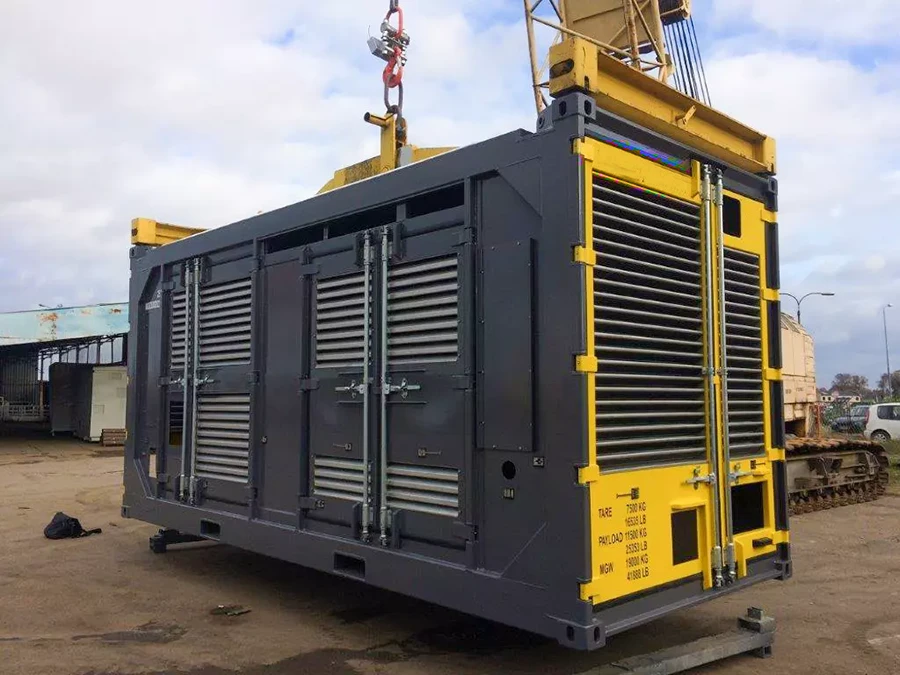
The common standard shipping containers include 20ft and 40ft sizes. Their main function is for transportation. The design is relatively simple, without complex accessories or internal layouts, and they can be stacked multiple layers. While offshore containers are specifically designed for offshore operations, they can be placed outdoors for a long time and have excellent corrosion resistance.
There are build strength and quality differences, but offshore containers must be certified by DNV and are thicker, heavier and have more features as well such as customized interior layout,specialized lift points and shackles as opposed to 'standard' cast corners... it comes down to strength for our applications, but some of the extra cost comes from being certified.

A Table to Show the Differences Between the Two Kinds of Containers:
|
Item |
Offshore Container |
Standard Shipping Container |
|
Design and Usage Purpose |
Designed for offshore operations, such as oil and gas extraction, etc., it needs to have the ability to withstand harsh marine environments and withstand high-intensity usage. |
Designed for conventional land transportation and maritime shipping, it focuses on the durability of the products and must comply with international logistics requirements. |
|
Size |
Customized for specific offshore operation,usually smaller than the standard shipping containers. |
The common sizes are 20ft,40ft,45ft. |
|
Loading Capacity |
Built to carry heavier load relative to size.(The safe weight is 25000kg) |
Max gross weight is typically 30480kg(20GP). |
|
Lifting and Handling |
The container body is welded with special heavy-duty lifting ears on all sides, equipped with steel wire ropes, and four points are synchronized for soft lifting. |
Standard ISO four-corner fittings, for crane lock lifting at the dock. |
|
Waterproof |
Multi-layer sealing + anti-wave drainage structure, resistant to seawater erosion and heavy rain soaking. |
Single-layer rubber door seal, with basic rainproof and waterproof functions |
|
Anti-corrosion Treatment |
NORSOK M-501 multi-layer anti-corrosion sandblasting coating, with a marine service life of up to 10-25 years |
Regular marine anti-rust paint doesn’t easily rust in the short term. |
|
Stack |
At most, only two layers of stacking are allowed, and the lifting devices cannot be dismantled. |
Multi-layer stacking permitted inside holds;extra lashing required for deck stacking |
|
Certificate |
DNV 2.7-1,ISO,CSC |
ISO,CSC |

The standard ISO shipping container is a globally standardized land sea freight container that is lifted from the dock using a crane at the four corners; the offshore container is a special anti-shock equipment unit for offshore operation,equipped with dedicated lifting ropes,heavy corrosion prevention,and ship classification society safety certification, is specifically used for lifting between platforms and supply ships.
So why the offshore container is much more expensive than the standard shipping container?The specific lifting ropes,heavy corrosion-resistant coating,DNV certification,more durable material and structure,strong customization,all the features mean the offshore container will be more expensive.
Container Family is a professional certificated special containers manufacturer,we have more than 10 years of experience and provide comprehensive customization service,contact us to know more information about our offshore containers or company!

Send Inquiry



X
We use cookies to offer you a better browsing experience, analyze site traffic and personalize content. By using this site, you agree to our use of cookies.
Privacy Policy