

- English
 简体中文
简体中文 Español
 Português
 русский
 Français
 日本語
日本語 Deutsch
 tiếng Việt
 Italiano
 Nederlands
 ภาษาไทย
 Polski
 한국어
한국어 Svenska
 magyar
 Malay
Malay বাংলা ভাষার
 Dansk
Dansk Suomi
Suomi हिन्दी
 Pilipino
 Türkçe
 Gaeilge
 العربية
 Indonesia
 Norsk
Norsk تمل
تمل český
český ελληνικά
 український
 Javanese
 فارسی
فارسی தமிழ்
தமிழ் తెలుగు
 नेपाली
 Burmese
 български
 ລາວ
ລາວ Latine
 Қазақша
 Euskal
 Azərbaycan
 Slovenský jazyk
 Македонски
 Lietuvos
 Eesti Keel
 Română
 Slovenski
 मराठी
मराठी

How Does a Half Height Container Optimize the Transport of High-Density and Over-Height Industrial Cargo?
Logistics managers handling industrial bulk materials often face a critical imbalance between cargo volume and total weight. High-density materials like iron ore, mineral sands, and heavy steel chains regularly hit the legal gross weight limits of a standard shipping container while utilizing less than half of its internal vertical space. This mismatch leads to shifting cargo, inefficient space utilization, and unstable centers of gravity during transit. Today we examines how the specialized Half Height Container manufactured by Container Family addresses these mechanical and operational inefficiencies.
1. The Logistics Paradox: Volume vs. Bulk Density
In international and domestic freight, cargo is generally limited by two constraints: volume capacity (cube out) and weight capacity (max out). Standard dry freight containers are optimized for consumer goods, electronics, and palletized commodities that possess a balanced weight-to-volume ratio. However, when transport operators attempt to load industrial commodities such as copper concentrates, bauxite, salt, or heavy steel anchors, they encounter a significant structural issue.
Because these materials feature an exceptionally high bulk density, filling a standard 8-foot-6-inch tall container to the top would grossly exceed the maximum allowable payload and frame structural limits. Consequently, operators can only fill the bottom fraction of a standard container. This creates an enormous amount of empty, wasted overhead space.
More importantly, it leaves the dense material prone to shifting violently during rail acceleration or sea swells, drastically altering the vehicle’s center of gravity. The introduction of the specialized Half Height Container directly solves this issue by matching the structural volume of the steel enclosure to the natural physical volume of heavy, dense payloads at maximum weight capacity.
2. Structural Anatomy of the Half Height Container
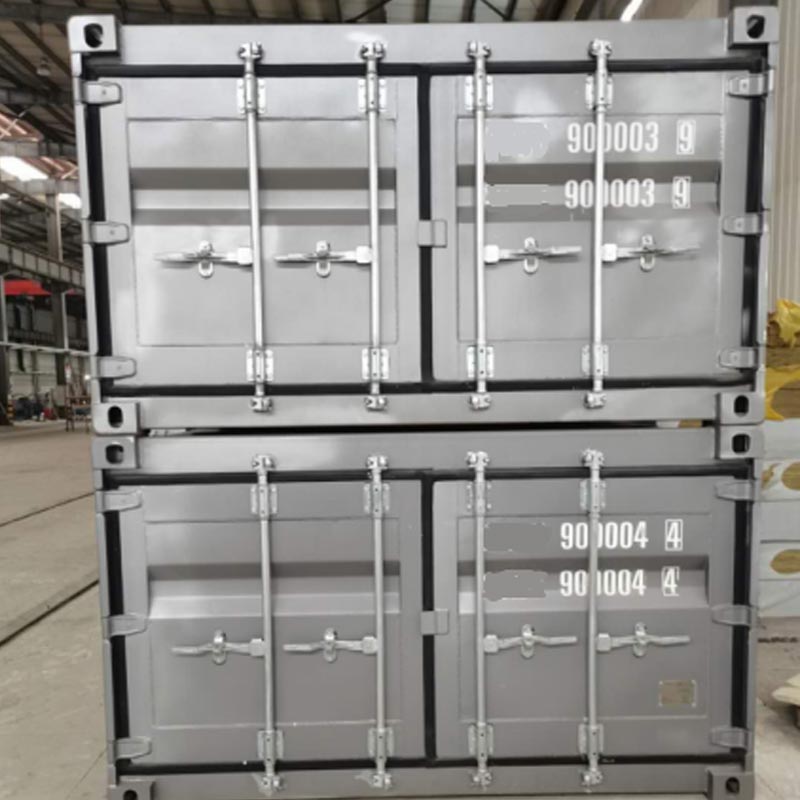
A premium Half Height Container manufactured by Container Family stands at exactly half the height of a traditional dry freight unit, typically measuring 4 feet or 4 feet 3 inches tall. By lowering the side profiles, the container achieves a far stiffer structural arrangement. The lateral walls do not require the same vertical corrugated expanse, allowing engineers to focus reinforcement on the floor chassis and lower corner posts where structural stress is most acute.
Reinforced Lower Chassis Construction
The floor matrix is constructed using high-tensile structural steel crossmembers spaced tightly together to prevent sagging or floor warping under concentrated wheel loads from forklifts or sudden drops from overhead hopper gates. The internal floor plates are typically thick, anti-slip checkered steel or reinforced smooth plate, designed to withstand the abrasive scouring action of mineral sands, scrap metals, or heavy tools.
Dual-Access Point Integration
To maximize versatility on industrial sites, these low-profile units incorporate a dual-access design:
• The Topside Loading Window: Because the vertical sides are short, overhead cranes, high-capacity excavators, and automated material chutes can drop bulk commodities directly past the top rim without striking the side sheets.
• Rear Swing Doors: Just like a conventional intermodal unit, the rear frame features heavy-duty dual swing doors with secure multi-point locking bars. This ensures that traditional palletized heavy goods, machinery parts, or long pipes can still be loaded horizontally using standard forklifts or warehouse skates.
3. Technical Parameters and Payload Capacity Configuration
Matching the right container dimensions to transport vehicles is critical to maintaining fleet compliance across international rail, highway, and maritime shipping lines. Container Family utilizes an intelligent manufacturing environment equipped with automated laser cutting lines and robotic welding stations to produce high-tolerance units adhering to strict ISO container standards.
The table below outlines the standard engineering parameters for standard industrial deployments in both compact and high-capacity configurations.
Equipment Architecture Matrix
| Structural Parameter | 20ft Half Height Configuration | 40ft Half Height Configuration |
| External Length | 20 feet (6,058 mm) | 40 feet (12,192 mm) |
| External Width | 8 feet (2,438 mm) | 8 feet (2,438 mm) |
| External Height | 4 feet to 4 feet 3 inches | 4 feet to 4 feet 3 inches |
| Enclosure Framework | High-Tensile Corten Steel | High-Tensile Corten Steel |
| Base Floor Support | Ultra-dense steel crossmembers | Ultra-dense steel crossmembers |
| Locking Mechanisms | 4-point heavy-duty container locks | 4-point heavy-duty container locks |
| Primary Structural Certifications | Fully compliant with ISO standards | Fully compliant with ISO standards |
| Surface Protective Coating | Marine-grade eco-friendly primers & anti-corrosion paints | Marine-grade eco-friendly primers & anti-corrosion paints |
4. Lid Variations: Hard Tops, Removable Tarps, and Open Top Physics
One of the defining design characteristics of the Half Height Container is its top enclosure adaptability. Depending on the environmental sensitivity of the commodity being shipped, operators can select different configurations to protect the cargo or facilitate rapid transshipment.
Removable Rigid Hard Lids
For valuable mineral concentrates, grain, or specialized industrial tooling, a removable steel or aluminum hard lid is clamped down using heavy-duty perimeter locking pins. This creates a fully sealed, weatherproof enclosure that prevents water ingress and dust contamination while providing a secure barrier against theft. When the unit arrives at an overhead unloading facility, the entire lid can be uncoupled and lifted clear via forklift pockets or top corner castings.
Removable Tarpaulins and TIR Cords
When transporting irregularly shaped industrial items—such as industrial valves, heavy machinery components, or vehicle parts that extend slightly beyond the upper rim—a flexible, heavy-duty PVC tarpaulin is utilized. The tarp is secured using robust elastic cords laced through structural perimeter rings (TIR compliance tracks). This allows for slight over-height clearance while still safeguarding the cargo against road grime and light precipitation during long-distance intermodal hauls.
5. Primary Industrial Applications: From Underground Mining to Infrastructure
The low profile and high structural integrity of the Half Height Container make it an invaluable tool across severe operational environments where traditional equipment would fail or sustain major structural damage.
Low-Clearance and Underground Mining Operations
In underground mining, subway tunnels, and subterranean construction sites, overhead clearance is severely restricted. Standard 8-foot-6-inch or 9-foot-6-inch high-cube containers cannot physically clear the rock faces or temporary timber shoring. The 4-foot height of these specialized units allows mining locomotives and heavy low-bed transport trucks to navigate tight mine shafts easily, collecting extracted ore, coal, or gravel directly at the underground face and moving it directly to surface rail lines without manual double-handling.
Heavy Infrastructure and Pipeline Projects
Infrastructure development involves moving incredibly long, heavy, and awkward components like cast-iron water mains, concrete steel-reinforced pipes, drilling collars, anchors, and heavy chains. Attempting to maneuver these items through the rear door of a standard container frequently damages the roof liner or door headers. Loading them downwards via crane into an open-top half-height unit eliminates these safety hazards entirely.
6. Operational Safety and Financial Benefits in Heavy Transit
Implementing a specialized fleet of low-profile containers provides clear financial and safety advantages for large-scale enterprise logistics providers.
• Lower Center of Gravity: Shifting the mass of heavy materials closer to the trailer chassis or rail car bed reduces lateral sway during high-speed cornering or heavy seas. This protects transport vehicles from rollover accidents and reduces mechanical wear on suspension systems.
• Streamlined Intermodal Transfers: Because these containers match standard ISO footprints, they integrate perfectly with existing container terminal equipment. Reach stackers, straddle carriers, and ship-to-shore gantry cranes handle them using standard spreaders, removing the need for specialized, costly lifting adapters.
• Corrosion Resistance and Longevity: Manufactured within the advanced production lines of Container Family, each unit undergoes comprehensive quality verification, surface blast cleaning, and multi-coat marine painting. This industrial-grade finish prevents premature rusting from chemical exposure, salt spray, or acidic mineral ores.
7. Frequently Asked Questions (FAQ)
Can two half-height units be stacked together to match a standard container slot?
Yes, under standard intermodal loading rules, two empty or appropriately weight-balanced half-height units can be stacked and locked together using standard container twistlocks. This allows them to occupy the exact physical slot of a single standard dry container on container vessels or double-stack rail cars, optimizing freight efficiency.
How does the water drainage system function on open-top models?
Units fitted with hard lids or secure tarpaulins feature sloped perimeters and drainage channels that shed rainwater away from the seals. For units running completely open, specific floor drain valves can be configured to prevent rainwater accumulation from overloading the total gross weight of the container during outdoor storage.
What customization options are available for specialized bulk materials?
Through the comprehensive custom engineering services provided by Container Family, clients can request internal features such as custom tie-down points, specialized interior chemical coatings, tail-gate tipping doors for rapid dumping, or customized forklift pockets positioned for specific material-handling machinery.
Are these units suitable for international maritime shipping?
Absolutely. All specialized containers manufactured at our facility conform to strict ISO standards and undergo comprehensive structural inspections. This ensures they can safely travel across all major global shipping lines, rail networks, and commercial trucking corridors without compliance delays.
Conclusion & Cooperation Invitation
Managing dense bulk materials, overweight equipment, or low-clearance mining freight demands specialized equipment engineered to handle extreme physical stress. Deploying a rugged, properly rated container fleet preserves your upstream transport assets, satisfies strict international safety regulations, and slashes loading cycle times down to a minimum.
Our design and technical department is fully equipped to review your payload densities, calculate required tare-to-gross weight thresholds, and fabricate a customized container fleet built around your specific operational workflows. To secure your supply chain with a dependable, high-durability Container Family Half Height Container, contact us today to discuss your site dimensions, outline your customization requirements, and receive a complete, itemized manufacturing quotation.
Send Inquiry



X
We use cookies to offer you a better browsing experience, analyze site traffic and personalize content. By using this site, you agree to our use of cookies.
Privacy Policy